
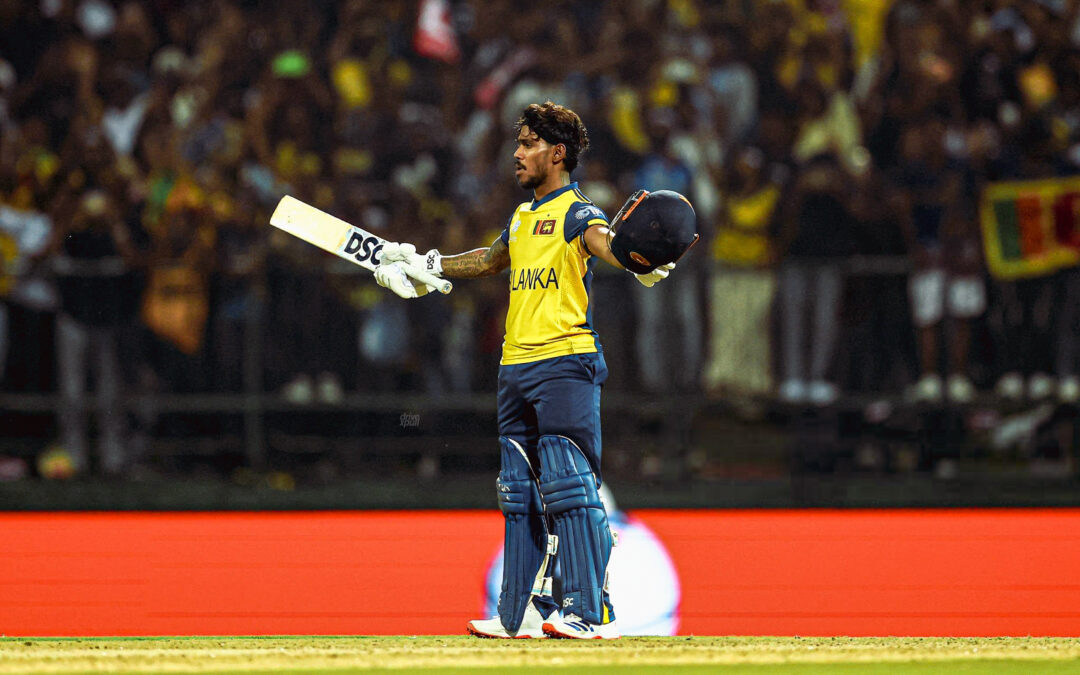
On 16 February 2026, the ICC Men’s T20 World Cup delivered one of its most defining moments as the Australia national cricket team saw their campaign come to a sudden halt following a commanding victory by the Sri Lanka national cricket team at the Pallekele International Cricket Stadium. In a result that stunned many fans and pundits, Australia national cricket team’s campaign at the ICC Men’s T20 World Cup 2026 came to an abrupt end after a convincing victory by Sri Lanka national cricket team at the Pallekele International Cricket Stadium. The hosts chased down a challenging 182 with ease, powered by a swashbuckling century and calm finishing that left Australia reeling and their Super-8 hopes all but extinguished.
Australia’s innings had started with real promise. After a ferocious opening partnership, the visitors accelerated to 104 inside nine overs and looked on course for a monster total. Captain Mitchell Marsh led from the front with a quickfire 54 off 27 balls, and Travis Head provided the perfect foil in the powerplay. But what began as dominance slowly unravelled as Sri Lanka’s bowlers changed tempo and execution in the middle overs. The scoreboard read 181 all out at the close of 20 overs — a total that proved par but not imposing.
The match turned when Sri Lanka’s slower bowlers – notably Dushan Hemantha and Maheesh Theekshana – applied pressure at the right times. Hemantha’s three-wicket haul and clever variations stemmed Australia’s late charge and kept the scoring under control, ensuring the visitors didn’t add the 20-30 extra runs they had threatened to. Mitchell Marsh himself singled out execution as the key flaw in Australia’s back end batting, saying that while the platform existed, the team failed to close out the innings properly.
Sri Lanka’s reply was methodical, mature and, at times, brutal. Opener Pathum Nissanka produced the innings of the night — an unbeaten 100 off 52 balls — anchoring the chase and shifting gears whenever required. A 97-run stand between Nissanka and Kusal Mendis effectively ended the contest as a contest; by the 12th over Sri Lanka were 104 for 1 and in complete control. Nissanka’s century was the first of the tournament and came at a perfect time for the co-hosts, who reached 184 for 2 with two overs to spare.
Beyond individual brilliance, the match highlighted a worrying theme for Australia: inconsistency and missed execution across multiple games. The loss to Sri Lanka followed a shock defeat to Zimbabwe, and those two results left Australia with only two points — not enough to progress once other Group B permutations fell their way. When rain washed out the Ireland vs Zimbabwe game, Zimbabwe were awarded a point that mathematically sealed Australia’s fate and confirmed their exit from the Super-8 stage. The wider cricket world reacted quickly — former players and media questioned selections, fitness and preparation — as Australia suffered an early tournament exit for the first time in many editions.
Captain Mitchell Marsh’s post-match reflections were blunt but measured. He admitted the team “were a few short” and repeatedly returned to the theme of execution: that Australia had the talent and platform but not the finishing clarity in the middle and death overs. He also paid tribute to Nissanka’s innings and acknowledged Sri Lanka’s skillful containment and discipline. Those quotes capture a team that understands where the problems lie — but also one that will now be forced to answer tough questions about preparation, balance and strategy.
What does this mean next? For Australia national cricket team, the immediate task is damage-control: learn, rebuild and ready a plan for the next T20 assignments. For Sri Lanka national cricket team, Nissanka’s hundred and the team’s composure have delivered momentum and belief heading into the Super-8s. The result also reshuffles the group dynamics — Zimbabwe’s resilient performances and Sri Lanka’s clinical finishing have provided two deserving qualifiers from Group B.
For fans, the exit is a reminder that T20 is brutally unforgiving: a single bad day or a couple of poor performances can wipe out pre-tournament favourites. For the Australian set-up it should spark reflection — on player workload, team combinations and execution under pressure. For neutral fans and Sri Lankan supporters, it was a night to savour: a home hero in Nissanka, smart bowling plans and the kind of drama that makes World Cups memorable.