
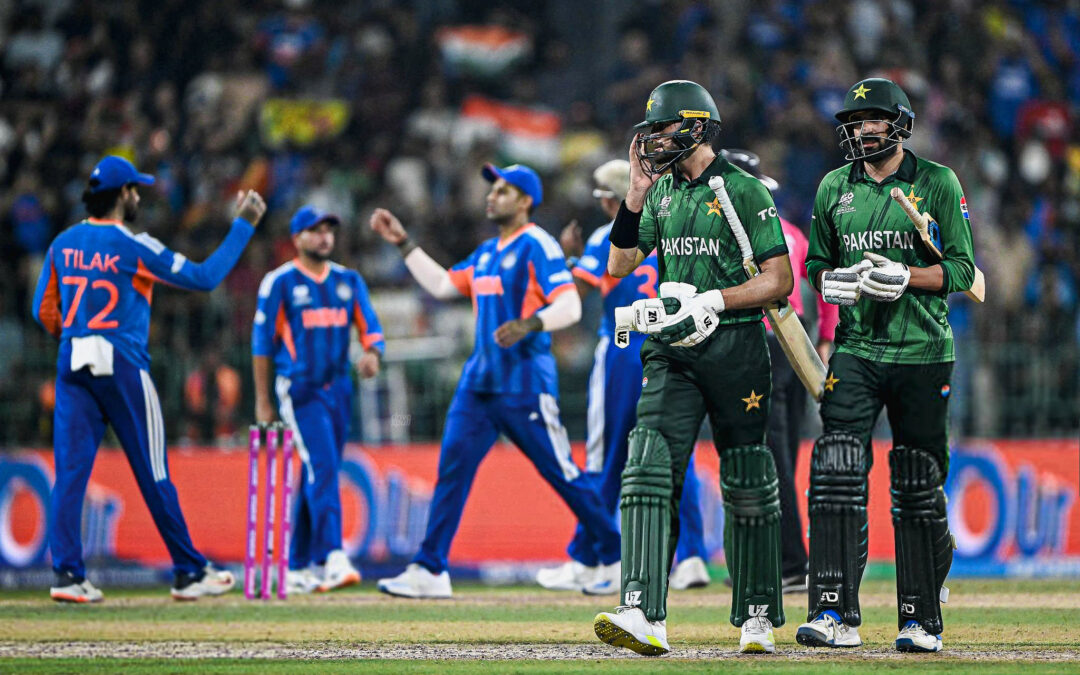
India produced a clinical performance to beat Pakistan by 61 runs at the R. Premadasa Stadium in Colombo on 15 February 2026, sealing their place in the Super-8 stage of the ICC Men’s T20 World Cup 2026. The result was comprehensive: India posted a competitive 175/7, powered by a breathtaking counter-attacking knock, and then bowled Pakistan out for 114 inside 18 overs as their spinners and death bowlers combined to snuff out any hope of a chase.
India’s innings began with early pressure but quickly shifted momentum when Ishan Kishan took charge. After an initial dismissal (Abhishek Sharma), Kishan exploded with an aggressive 40-ball 77, slamming boundaries against both pace and spin and steering India to 175/7. His attacking intent in the PowerPlay and ability to find gaps against spinners changed the course of the innings on a surface that offered turn. Support came in useful measures from Suryakumar Yadav (32 off 29) and late contributions from Shivam Dube and Rinku Singh, who ensured India crossed the 170 mark despite a mid-overs slowdown. The innings perfectly mixed aggression with sensible rebuilding on a spin-friendly track.
Pakistan’s bowling plans tried several slow-bowling options — even using a large spin contingent — but Kishan’s timing and shot selection largely nullified that plan in the first half of India’s innings. Bowlers like Abrar Ahmed and Saim Ayub (as a bowler in the match report context) were targeted, and Pakistan struggled to contain the scoring in the PowerPlay and middle overs once Kishan accelerated. Yet Pakistan did have moments: late wickets from their spinners and a tidy late over or two kept India from running away with an even bigger total.
Chasing 176, Pakistan never got comfortable. The chase collapsed rapidly after India struck early: Hardik Pandya set the tone with an immediate wicket and an excellent opening over that put Pakistan on the back foot, and Jasprit Bumrah produced a searing yorker to remove another in the powerplay. By the time spin was introduced, Pakistan were already 13/3, and India’s spinners — notably Axar Patel and Varun Chakaravarthy — tightened the screws, picking crucial wickets and choking the run rate. Pakistan’s lone substantial resistance came from Usman Khan, who made 44, but once he fell the innings unraveled and Pakistan were bowled out for 114.
The match’s turning points were clear and decisive. First, the early PowerPlay dominance by Kishan meant India never had to play catch-up; his 77 not only added bulk but forced Pakistan to rethink matchups. Second, India’s new ball execution — a wicket-maiden followed by a yorker from Bumrah — removed top-order momentum and made the chase an uphill task. Third, the spinners’ control in the middle overs prevented any large partnerships from forming, a crucial factor on a turning surface where single overs could decide momentum.
From an individual performance perspective, Ishan Kishan was the clear match-winner with his 77 off 40 balls, and he was rightly adjudged the game’s defining influence; other bowlers who stood out were Hardik Pandya (2/16) and Varun Chakaravarthy (2/17), both of whom applied pressure at crucial moments. Jasprit Bumrah’s early strike and the tight lines of India’s spinners made the difference between a competitive total and a defendable one. On Pakistan’s side, while Usman Khan’s 44 showed fight, the lack of partnerships and the top four’s collective failure (13 runs for the first four) ended the contest early.
Tactically, India’s approach was textbook for a spin-helping pitch: attack the spinners early to deny them confidence, and use your own spin resources to dominate the middle overs. Pakistan, perhaps anticipating dew or hoping for a batting collapse, gambled on using multiple slow bowlers — a World Cup record six slow bowlers was noted — but that strategy backfired when Kishan refused to yield. Once the early wickets fell in the chase, Pakistan’s plan offered no recovery route. The disciplined use of wrist spin and varied trajectories by India’s bowlers prevented the formation of any steady partnerships.
Implications and what comes next: the win confirms India national cricket team’s spot in the Super-8s and underlines their depth in both batting and bowling going into the knockout stages. For Pakistan national cricket team, the loss makes their final group match against Namibia effectively a must-win if they are to progress. Beyond points, the psychological edge in India-Pakistan encounters remains with India after a commanding victory that showcased control in all three phases of the game.
Final scorecard (brief): India 175/7 (Ishan Kishan 77, Suryakumar Yadav 32) beat Pakistan 114 (Usman Khan 44) by 61 runs. Key bowling: Hardik Pandya 2/16, Varun Chakaravarthy 2/17; Pakistan’s Saim Ayub returned figures of 3/25.